
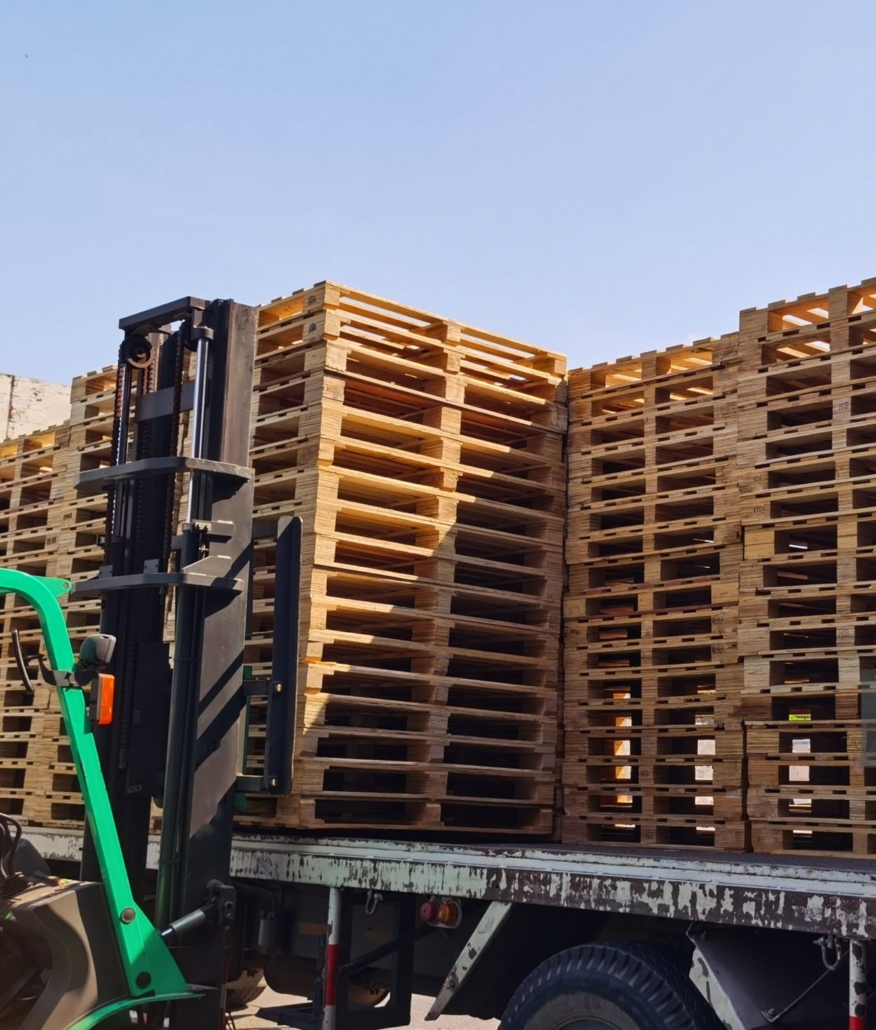
The Complete Guide to Buying EPAL Pallets Wholesale: Standards, Market Insights, and Sourcing Strategies
Few tools are as fundamental to logistics and supply chain management as the humble pallet. Among the myriad options available, one name stands out as the undisputed global standard: the EPAL pallet . For businesses involved in manufacturing, distribution, or international trade, sourcing these pallets at wholesale level represents a strategic decision that extends far beyond simply purchasing wooden platforms.
This comprehensive guide covers everything you need to know about buying EPAL pallets wholesale. We will examine their stringent quality standards and technical specifications. We will also navigate current market trends and help you avoid common pitfalls. Throughout, we focus on practical insights without naming specific suppliers, empowering you to make the best decision for your business.
What Is an EPAL Pallet?
An EPAL pallet—often called a “Euro pallet” or “EUR pallet”—is a standardised wooden platform certified by the European Pallet Association (EPAL). This organisation was founded to guarantee the quality and interchangeability of pallets across international borders. To achieve this, EPAL has established rigorous technical regulations governing every aspect of production, repair, and inspection.
Currently, more than 650 million EPAL pallets circulate worldwide, making them the most widely used exchange pallet globally. The system operates as an “open pool,” allowing participants from all industry sectors to exchange pallets based on a guarantee of standardised, uniform quality. This interchangeability delivers a massive benefit for international trade, ensuring that a pallet loaded in one country can be seamlessly used and exchanged in another.
Why Choose EPAL? The Hallmarks of Quality
Investing in EPAL-certified pallets means investing in reliability, safety, and efficiency. The association’s strict quality controls offer numerous tangible advantages:
-
Standardised Quality: Every EPAL pallet is produced and repaired according to identical technical specifications, guaranteeing consistent size, strength, and performance.
-
Rigorous Inspections: An independent organisation, such as Bureau Veritas in France, conducts unannounced quality checks on licensed manufacturers to ensure ongoing compliance.
-
Safety and Durability: EPAL pallets are designed for a long service life of 8 to 10 years. They guarantee maximum occupational safety and stable storage of goods.
-
Legal Protection: The EPAL mark is an internationally registered trademark. The association actively pursues legal action against counterfeiters, protecting both the integrity of the pool and your investment.
-
Environmental Responsibility: EPAL pallets are made from wood, a renewable resource, and are fully repairable and recyclable.
-
Interchangeability: EPAL pallets are exchangeable on a one-for-one basis, provided they meet the required quality standards.
EPAL Pallet Types and Technical Specifications
While the most common EPAL pallet is the standard EPAL 1 (EUR 1), the association has defined several formats to accommodate different logistical needs.
EPAL 1 (EUR 1) – The Euro Pallet
This is the most widely used exchange pallet in the world.
-
Dimensions: 800 mm (W) x 1,200 mm (L) x 144 mm (H)
-
Weight: Approx. 25 kg
-
Safe Working Load (Dynamic): 1,500 kg
-
Maximum Load When Stacked (Static): Up to 5,500 kg for the bottom pallet
-
Construction: 11 boards, 9 blocks, and 78 nails
EPAL 2 (EUR 2)
-
Dimensions: 1,200 mm (W) x 1,000 mm (L) x 144 mm (H)
-
Application: Commonly used in retail and for transporting beverages
EPAL 3 (EUR 3)
-
Dimensions: 1,000 mm (W) x 1,200 mm (L) x 144 mm (H)
-
Weight: Approx. 30 kg
-
Application: Increasingly becoming the new standard for the chemical industry
-
Construction: 13 boards, 9 blocks, and 84 nails
EPAL 6 (EUR 6) – The Half-Pallet
-
Dimensions: 800 mm (W) x 600 mm (L) x 144 mm (H)
-
Application: A perfect half of a standard pallet, ideal for retail displays and point-of-sale (POS) materials
Understanding EPAL Certification and Markings
Authenticity is crucial within the EPAL system. Counterfeit pallets represent a significant problem because they lack the strength and quality of certified ones, posing risks to both goods and workers. To identify a genuine EPAL pallet, look for the following markings:
-
EPAL Logo: Stamped in an oval on the central blocks
-
Manufacturer Code: The licence number of the producer
-
Country Code: e.g., FR for France, DE for Germany
-
Production Date: Month and year of manufacture
-
IPPC Mark: A mandatory stamp indicating the pallet has been heat-treated (HT) in compliance with ISPM 15 for international shipping
-
EPAL Control Staple: A branded staple (mandatory)
-
Repair Nail: A specific nail used only if the pallet has been professionally repaired
For quick verification, many professionals now use a UV lamp to detect invisible security markings added to official pallets since 2018. The financial difference is stark: a genuine EPAL pallet can resell for €8–12, whereas a counterfeit is only worth €3–5.
New vs. Reconditioned vs. Used EPAL Pallets
When buying wholesale, you have several options. Each carries its own cost-benefit profile, and understanding these differences will help you make the right choice for your operation.
New EPAL Pallets
These are brand new and carry full EPAL certification. They are mandatory for international transport and for sectors with strict hygiene standards, such as the food and pharmaceutical industries. Their lifespan typically reaches 8–10 years.
Reconditioned EPAL Pallets
These are damaged pallets that have been professionally repaired by an EPAL-licensed operation. They retain 90–100% of the strength of a new pallet while costing 40–50% less. They are identifiable by a specific repair nail.
Used EPAL Pallets
These pallets show signs of wear but remain structurally sound. They offer a cost-effective option for internal storage and national logistics where the strictest standards may not be required.
The Wholesale EPAL Pallet Market: Trends and Pricing
The pallet market is dynamic and closely tied to the broader economy and raw material costs. Understanding these trends will help you time your purchases and negotiate effectively.
Market Size and Growth
The European pallet wholesale market alone was valued at $2 billion in 2025**. Globally, the market size is estimated at **$88.3 billion in 2025 and is projected to grow to $92.7 billion in 2026, with a forecast CAGR of 5.8% from 2026 to 2035. In 2025, consumption volumes grew by +6.20%, and EPAL pallet production increased by +3.5% compared to 2024.
Price Drivers
Current market dynamics are pushing prices upward due to several interrelated factors:
-
Raw Material Scarcity: A structural shortage of raw wood, particularly logs from Austria and Germany, is a primary driver. Consequently, sawmills have passed on significant price increases to downstream industries like pallet manufacturing.
-
Logistics Bottlenecks: There is a real risk of a logistical bottleneck if industrial demand suddenly rebounds. This could create a supply shortage similar to that seen in 2022.
-
Geopolitical Factors: Strong demand for wood and increasing freight costs continue to exert upward pressure on prices.
Price Ranges (Indicative)
Prices are highly variable based on volume, condition, and location.
-
New EPAL Pallet: Generally ranges from €15 to €25 depending on quantity. In the DACH region (Germany, Austria, Switzerland), the price for a new EUR-1 pallet was around €12.21 in mid-2026.
-
Used EPAL Pallet: Typically sells for between €5 and €10, though a broad range of €7.50 to €19.50 is also reported depending on quality and quantity.
How to Buy EPAL Pallets Wholesale: A Step-by-Step Guide
1. Define Your Requirements
Be specific about your needs from the outset. Determine the type (EPAL 1, 2, 3, or 6), condition (new, reconditioned, or used), and the quantity you require. This clarity will help you get accurate quotes and avoid overpaying.
2. Verify Supplier Authenticity
Only purchase from an EPAL-licensed manufacturer or repairer. These companies hold a licence proving they strictly adhere to the EPAL Technical Regulations. Counterfeiters pose a real risk, and buying from unlicensed sources exposes you to legal and logistical problems.
3. Inspect for Proper Markings
When you receive a shipment, always inspect a sample of the pallets. Check for the required EPAL markings and the IPPC stamp. Use the checklist in the “Understanding EPAL Certification” section above. This simple step can save you thousands in lost value and potential customs delays.
4. Check for Quality and Damage
Learn what makes an EPAL pallet “non-exchangeable” and reject pallets with:
-
Missing boards or blocks
-
Cracked or split blocks where more than one nail shank is visible
-
Boards broken transversally or diagonally
-
Rotten or decayed wood
-
Contamination (e.g., chemical spills)
-
Heavy splintering on multiple blocks
5. Negotiate Commercial Terms
In a volatile market, consider agreeing on pricing mechanisms that reference reliable indices, such as the Cril index for semi-finished products, to create fair and transparent contracts. Additionally, discuss minimum order quantities (MOQ), delivery schedules, and payment terms before signing.
6. Plan Your Logistics
Consider the logistics of delivery carefully. Working with a supplier who can deliver efficiently will help you limit transport costs and stock shortages. Be aware of seasonality, as wood market prices and availability can fluctuate. For international shipping, ensure the pallets carry the correct ISPM 15 (NIMP 15) heat treatment markings.
Future Trends in the EPAL Pallet Wholesale Market
Digitalisation with QR Codes
The EPAL system is embracing digitalisation. By the beginning of December 2025, more than 5 million EPAL Euro pallets with QR codes had been produced, paving the way for enhanced traceability.
Expansion of the EPAL 3 Standard
The EPAL CP pallet (EPAL 3) is undergoing further development and is becoming the new pallet standard in the chemical industry.
Focus on Circular Economy
Strong regulatory pressure in the EU is accelerating the shift toward reusable and recyclable packaging solutions. This regulatory environment plays directly into the strengths of the EPAL system.
Asia-Pacific Growth
The Asia-Pacific region is expected to show the highest growth, driven by expanding logistics infrastructure and export-oriented manufacturing. Notably, the EPAL 3 is being positioned as the new Asian standard.
Conclusion
EPAL pallets are far more than simple wooden platforms; they form the backbone of a standardised, efficient, and truly global logistics system. Buying them wholesale is a strategic decision that demands careful attention to quality, authenticity, and market conditions. By understanding the technical specifications, recognising genuine certification, and staying informed about market trends, you can secure a reliable supply of these essential tools for your supply chain. Consequently, your goods will move safely and efficiently for years to come.


Leave a Reply
Want to join the discussion?Feel free to contribute!